
New to town? How one weekly game builds a local circle

Moving somewhere new can feel like everyone else already has their people. It’s not that locals are unfriendly. It’s that most meetups are one-off and anonymous, so you can chat once and never see the same faces again. That makes settling in feel slower than it should.
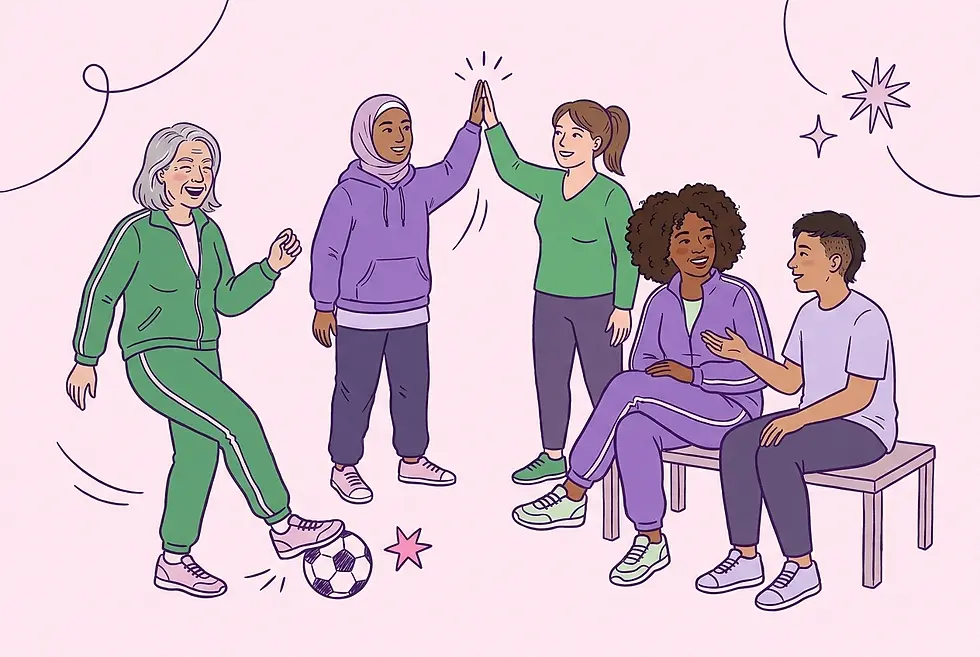
Here’s the useful bit: friendship tends to need hours together. A recurring same-slot activity, like a weekly community football game, stacks those hours up without forcing you to be sporty or outgoing. You can arrive alone, meet a Vibe Protector, play in trackies and trainers, then chat over a café or pub trip. No scores. No pressure. All gals welcome: women, non-binary and LGBTQ+ people, every age, body and ability. Awkward? Normal. One brave turn-up is enough.
Next, we’ll cover why a new town feels hard, the honest maths on making friends after a move, why same time, same people works, why a no-scores game suits non-sporty types, what your first session is like, weeks two to eight, long-term friendship, where community football comes in, and one friendly next step. Book a paid taster or ask about becoming a Vibe Protector if there’s no game near you at www.galsfc.com.
Why a new town feels harder to crack than it should
It's not that people in your new town are unfriendly. It's that most of what's on offer is one-off and anonymous.
Think about the usual list. You go to a pub quiz once and nobody clocks you the second time. The gym class has a different cast every week. A meetup ends with swapped numbers and silence.
Psychologist Jeffrey Hall looked at how long friendship actually takes. His study suggests roughly 50 hours together to go from acquaintance to casual friend, about 90 to reach friend, and 200-plus for close friend. Reports of those numbers vary, so check them against the DOI record before quoting: some write-ups give 40 to 60, 80 to 100, and over 200. As Hall told KU News, you can't snap your fingers and make a friend.
That's why one big night out does less than a repeating slot. Same night, same time, same faces. Week after week of small hellos and daft warm-up jokes adds up.
So the question isn't where to meet people once. It's where you keep meeting the same people. Wondering whether Gals FC is good for meeting new people? That's the bit a weekly slot solves.
[Editor: confirm Hall's figures and the KU News quote against DOI 10.1177/0265407518761225; Motherwell's numbers differ, so verify before publishing.]
The honest maths on making friends after a move
Right, let's do the sum properly.
One hour a week is about 9 hours across two months. Researchers put casual friendship at around 50 hours, so by week eight you're roughly a fifth of the way there. That's recognition, not friendship. No promises of a best mate by autumn.
What those two months really deliver is smaller and more useful: names, faces, someone who nods at you in the Co-op, a group you can walk into without scanning the room first. If you're weighing up whether Gals FC is good for meeting new people, that familiar stage is the foundation everything else gets built on.
Then there's the bit people skip. An hour of football plus an hour in the café or pub afterwards roughly doubles your weekly hours, so the social bit isn't optional extras. It's where the time accumulates. And it's the right sort of time: KU reporting on Hall's study found that hanging out, joking around and playing games count toward friendship, while hours spent working alongside someone count less.
One honest flag: no study compares weekly games with gym classes, pub nights or one-off meetups. What follows is reasoning from Hall's findings plus what club members report, not research findings from a football club.
Same time, same people, every week
A fixed slot cuts out the admin. Same night, same hour, same pitch, every week. No group chat diplomacy, no waiting to see which gals are in this week, no deciding. It is just Tuesday, and you are going.
That repetition does something a one-off can't. Week one you learn two names. Week four you know who always arrives early and who is reliably late. Week eight there are running jokes about the warm-up. One-off events reset you to zero every time; a recurring session carries last week's conversation into this one, so you pick up where you left off instead of starting over.
Which is really what people mean by community football, or football in the community. It is not a slogan on a banner. It is roughly the same group turning up for each other, week after week, until the faces are familiar and the hellos come first.
Worth being straight about this bit: that is reasoning plus what our members tell us, not a study finding. We think it holds up. You could fairly say it is still just an argument, and it is.
So what does the hour itself actually look like?
Why a no-scores game suits people who aren't sporty or outgoing
The format does most of the work here. No scores, no trials, no referees, no slide tackles. When nothing's riding on the result, there's nothing to lose, which takes the worst of the pressure off a first session.
You don't have to be a football person to be there. Plenty of gals arrive having never played, or having last kicked a ball at school. Gals FC's 2025 impact survey (self-reported) found 86% had never played or only played as children. But if you do play, you're just as welcome. It's a recreational club, not a trials ground.
Kit is simple: trackies and trainers will do. No specialist gear, no need to get fit first, and no fitness test waiting for you. The hour follows a recognisable shape: warm-up, icebreaker, simple drill, then a match with whoever turned up. The icebreaker handles the introductions, so you're not left trying to invent small talk on your own.
Chatting afterwards is easier than a first date style meetup. You've just spent an hour doing something together, so you already have something to talk about. That's often where the real conversations start.
If you're wondering whether it works for meeting people, see Is Gals FC good for meeting new people?. Next, what turning up alone actually looks like.
Turning up alone: what your first session is really like
New joiners can book a paid taster before membership, so your first game doesn't commit you to anything. Session times and fees do change, so check www.galsfc.com for current details rather than trusting a figure from anywhere else.
Two volunteer Vibe Protectors (VPs) are there for exactly this. Their job is greeting people and building the group, so you're not walking into a room where everyone already knows each other. One meets you at the start.
There are no trials, no scores and no specialist kit. Trackies and trainers are fine, and the game is played with whoever turns up, so one extra person doesn't unbalance a team or leave you on the sideline.
Honestly, the first one might feel a bit awkward. That's normal, and it isn't a sign the club isn't for you. The nerves usually belong to the first ten minutes. Be brave, give it a go, then stay for the café.
Still deciding? Is Gals FC good for meeting new people? answers the question most people are too polite to ask.
Weeks two to eight: what actually changes
After your first session, the change is gradual rather than cinematic. Week one, you half remember names and spend the warm-up working out who you have already met. Week three, someone says hello to you first. By week six, you are part of the usual order at the café afterwards, and nobody has to ask what you drink.
The small stuff does the heavy lifting: icebreakers, a Vibe Protector making introductions, and the same faces turning up week after week. Lots of tiny encounters stack up faster than one big night out.
So stay for the pub, café or social spot. It is the single most useful thing you can do. Alcohol is completely optional; a soft drink and a chat count just the same.
Be honest about the timeline. After two months, you should recognise most faces and get greeted. That is the familiar face stage, not long-term friendship. Deep friendship comes later, when you keep turning up past that point. Turn up once and you are back where you started. Repetition is the whole trick, and it is what makes a weekly game different from a one-off meetup.
Long-term friendship: the bit nobody tells you
Familiar faces are where the longer game begins. Jeffrey Hall's research puts friendship in hours: roughly 50 hours together for casual friendship, around 90 to reach friend, and 200-plus for close. Time together is the strongest predictor of closeness, according to summaries of his study. The long game is simply repetition.
The unglamorous bit? Friendship is effortful, not passive. It means turning up when you cannot be bothered and staying for the drink when you would rather go home. Hall's line: you cannot snap your fingers and make a friend. Loneliness in a new town rarely lifts by accident; it lifts when you're regularly in the same room as the same people.
If football turns out not to be your thing, that's fine. What you're really after is a recurring slot with the same people, so find whatever gets you into the same room weekly: a choir, a running group, a quiz team. Same night, same faces, every week does the heavy lifting.
No game near you? Gals FC is looking for new games and Vibe Protectors, and no football experience is needed.
[To verify before publishing: Hall's figures against the DOI record, and any loneliness claim against ONS or Campaign to End Loneliness.]
Where community football comes in
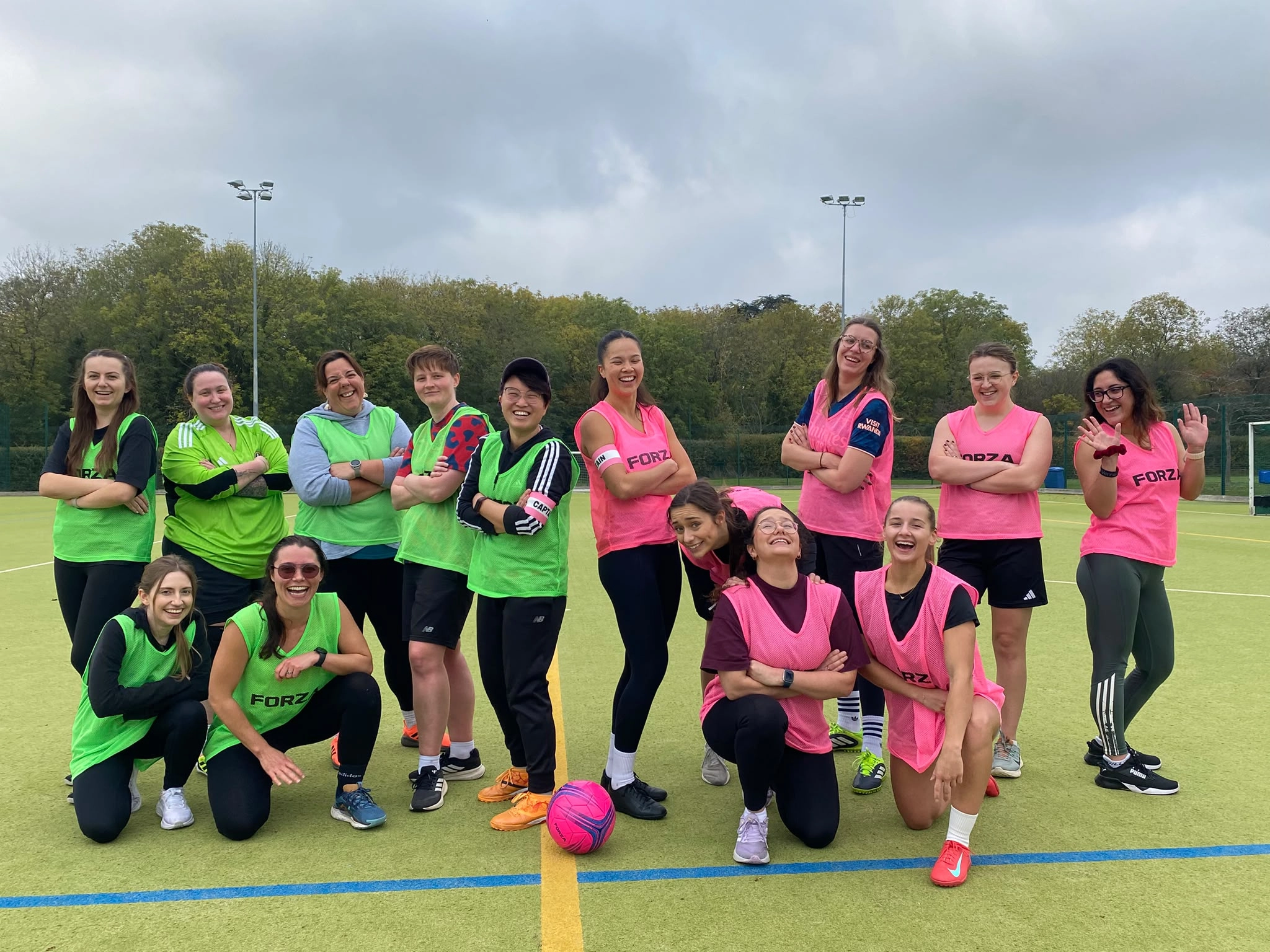
If you're near a Gals FC game, community football might be your weekly slot. Founded in 2022, Gals FC is a recreational football club for adult women and non-binary people, with games in 85 UK locations. Head to the site to find one near you.
It's LGBTQ+ friendly and open to all abilities, body sizes, fitness levels and ages 18 and up. Whether you played as a kid, play now, or have never kicked a ball, you're welcome.
Sessions run for an hour: warm-up, icebreaker, a simple drill, then a match with whoever turned up. No scores, no trials, no referees, no slide tackles. Trackies and trainers will do.
The club's own 2025 impact survey, which is self-reported, found that 82% made new friends, 99% left happier, 94% reported a positive mental health impact and 100% had a good time.
Then comes the bit after. Many groups head to a pub, café or social spot, and the club actively encourages that time to connect. That's where the same faces keep turning up, week after week.
One friendly next step
So, the one thing to do this week. Head to www.galsfc.com, find your nearest game and book a paid taster. Check current session details and fees there before you go, as they're kept up to date on the site.
No game near you? Gals FC is looking for new games and Vibe Protectors, and no football experience is needed. Chat to the team about starting a local game, or explore other Gals FC games nearby to see what's on.
Pick a slot, turn up once, stay for the drink afterwards. That's the whole plan.
[Editorial check before publishing: verify local details, prices and the Hall figures against the DOI record, and confirm the game-finder link resolves correctly.]
Conclusion
Starting over in a new town is hard, and friendship rarely happens by accident. It usually comes from the same time, same place, same faces, week after week. Gals FC makes that easier with no-scores football, open to all abilities, body sizes, fitness levels, ages 18 and up, and LGBTQ+ friendly. You can turn up alone in trackies and trainers, meet a Vibe Protector, play a simple session, then chat afterwards. That drink is often where the circle starts.
So pick one friendly next step: go to www.galsfc.com, find your nearest game, and book a paid taster. Check current session details and fees on the site. No game nearby? Ask about becoming a Vibe Protector or starting a local game. Be brave once. See who turns up next week.

Comments