%20(3).png)
One Gal's Take: 5 Essential Talking Points from the Men's World Cup
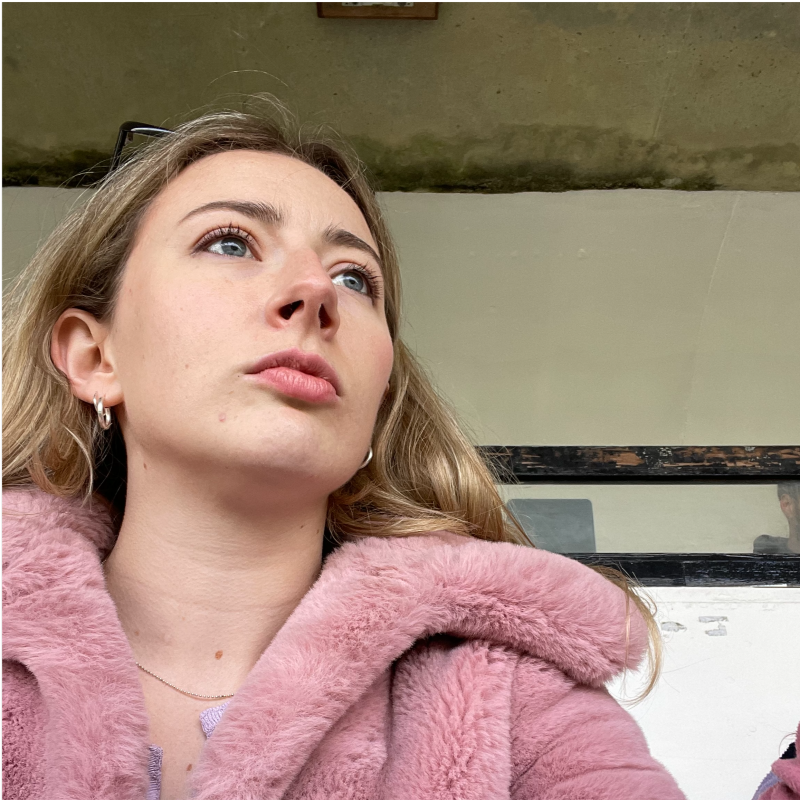
The 2026 FIFA Men’s World Cup is the most extravagant celebration of football to date. More teams, more drama, more history. And female fandom is booming.
More women are coming to football as both participants and fans as the women’s football wave continues to swell. But the FIFA Men’s World Cup is a different beast to the women’s competition. For the UK at least, the FA’s 50-year ban on women’s football has left the women’s game playing catch up and football was traditionally the playground of mostly male supporters.
What it means to be a football fan is changing. There’s no denying that women belong in football, that’s indisputable. But how are women being included in this World Cup and what does expanding female inclusion look like? Here are five ways women and issues affecting women are having an impact on the tournament:
Female referees
Referee Tori Penso and assistants Brooke Mayo and Kathryn Nesbitt set milestones as the first all-American female team of officials, and the first with an openly queer match official at a FIFA Men’s World Cup. They are the second all-female refereeing team (so good it happened twice). It first occurred in Qatar 2022 with Stéphanie Frappart (France), assisted by Neuza Back (Brazil) and Karen Díaz Medina (Mexico).
Is this a token gesture to female inclusion in officiating? A record-tying six female officials (two referees, three assistants, and one video assistant) were selected for this World Cup. Ok, you can celebrate progress, but that’s only six out of 170 match officials, and all six represented the CONCACAF federation, one of five federations with participating teams. It’s a long way to go before anything we can remotely call parity. Perhaps this is why it felt so important to celebrate Tori Penso and her team this tournament when they took centre stage.

Aiming to back up the records set in Qatar in 2022 with another all-female team in 2026 is encouraging and ultimately visibility enables inspiration (you’ve got to see it to be it), so while we may have to wait until the next World Cup to perhaps see two (imagine, two!) all-female officiating teams, progress, for now, remains incremental.
Emma Hayes and the kitchen sink
ITV Sport was lambasted online as their punditry segment with USWNT Manager Emma Hayes appeared to place her in a kitchen with a blackboard. This decision raised many questions. Would a male pundit have been placed there? Would a male pundit in a kitchen have attracted the same criticism?
Whether the decision to place an elite figure of the women’s game – a seven-time WSL winner - in a kitchen-styled set reflects the producers’ conscious or unconscious bias, the ensuing debate has derailed the acclaimed analysis from that segment (although the fact many viewers were surprised at the quality of Hayes’ expertise is also eyebrow raising - come on, it is Emma Hayes here).
These Gals FC members shared their thoughts on the matter:
"Emma Hayes was in a kitchen, the blackboard was on a weird angle so you couldn't see it, and there were men in the pub shouting at the screen ‘Get this woman off the screen’.”
"There's Emma Hayes on the TV making really good insights about football — much better than most men could — and everyone was shouting at her. People didn’t even recognise who she was.”.
Visibility is key, but female pundits in the men’s game regularly have to deal with snide remarks and sometimes more serious attacks, most notably Eni Aluko and Lucy Ward. Ex-footballer Joey Barton was convicted of sending grossly offensive messages about Aluko and Ward in 2024 and handed a suspended jail sentence, marking a watershed moment for this brand of misogyny.
The quick and widespread criticism of ITV’s set design was encouraging, but many will remember the unwarranted criticism of Hayes’ work. Hayes, like any professional, insisted on focusing on the football analysis.
Ultimately, it is hugely positive to see key figures like Hayes at the forefront of the men’s tournament and I hope we see more of her.
One Gals FC member aptly summarised the pitfalls:
"Even from a safeguarding position, if you put a woman in that position, you need to consider what comments she's going to get the next day.”
Women’s shirts
A question burning on my mind: If you have an Alessia Russo or Chloe Kelly England shirt, can you wear that to support the men’s team? For now, my answer is absolutely!
You could argue that each team and tournament deserves its moment in the spotlight but, there was nothing more heart-warming than seeing a group of young women in the fanzone adorned with Lionesses jerseys: Russo, Williamson and Earps. Being a fan means supporting the Three Lions however you can. The age of needing to know every player and statistic is over. On and off the field, this is a new era for England. The old boys can have their Gascoigne shirts, and I can wear my Kelly one, we are all supporting the same badge.
Thomas Partey
Trigger warning - sexual assault
Ghana’s Thomas Partey, 33, was charged with five counts of rape and one of sexual assault in July 2025, and two further counts of rape in February 2026. He denies wrongdoing and has pleaded not guilty. His case is expected to go to trial in the UK in 2027.
His inclusion in the tournament, and FIFA’s profound lack of a stance, has ultimately forced individual nations, players and broadcasters to make their own calls. Canada denied Partey a visa for Ghana’s 1-0 Group Stage win against Panama in Toronto, while the USA granted him entry for other matches. England’s Djed Spence refused to shake his hand in the pre-match line up for which Spence himself received online abuse.
One Gals FC gal commented:
“Everyone thought the England team wouldn't shake his hand — but they did. It felt like a disappointment."
Partey’s case serves as the latest example of men’s football failing to take a unified response to such issues and begs the question: Where does this leave women subject to violence perpetrated by men within football? The actions of these individuals cast a long shadow over the game.
WAG-ery / The WAGs
The documentation of the lives and looks of football wives and girlfriends has evolved into an aesthetic of its own.
In the UK at least, WAG fever is partially tongue-in-cheek, evoking a Viva Britannia nostalgia of the early noughties. Led by Posh Spice and girl power, it was about living loudly and unapologetically, but also with a hint of ‘I’m just a girl, here to look great and have fun’.
Some brands have parodied this into a marketing strategy with a heavy-handed emphasis on the lazy stereotype that many women watching football during the tournament know little about the sport. Footwear brand Schuh, in an Instagram post since taken down, posted a collage with the caption: ‘Came to the pub for the girls and one man only’, a reference to England’s Jude Bellingham. The line between being playful and patronising with female fans is a fine one and when brands don’t get it right, it really misses (Sky Sports Halo, I’m looking at you).
Let’s make one thing clear. Female support in the men’s game is not exclusively positioned in relation to admiring the men involved. There are casual fans, but there are seriously dedicated and knowledgeable female fans, too. And a reminder for all: Looking fantastic and being a student of the game are not mutually exclusive.
This piece is part of Gals on the Ground, opinions from our community, not the newsroom.
Read something that resonated? Send us a message on +44 7486 378371 to let us know what you think
.
To learn more about our club, visit galsfc.com or follow us on Instagram @gals.fc.


Comments